
Montgomery County Criminal Court Records
Criminal Court of Common Pleas records in Montgomery County are kept by the Clerk of Courts. The office handles criminal filings, certified criminal documents, bail, appeals, expungement filings, fines, costs, restitution, and case-status records for criminal Common Pleas matters. The office is at the Montgomery County Courthouse on the second floor at 2 E. Airy Street in Norristown, with county mailing through P.O. Box 311.
The Court of Common Pleas is the county's general trial court and is part of Pennsylvania's 38th Judicial District. Felony and misdemeanor cases often begin in Magisterial District Court for preliminary arraignment, bail, and preliminary hearing. If the case is held for court, the formal Court of Common Pleas case file continues with docket entries, charges, motions, plea or trial activity, disposition, and sentencing. Charge details are covered more closely in Montgomery County arrest records and court charges, while the criminal court record focuses on the whole case file.
The Clerk of Courts payment page is a manifest source for this page.
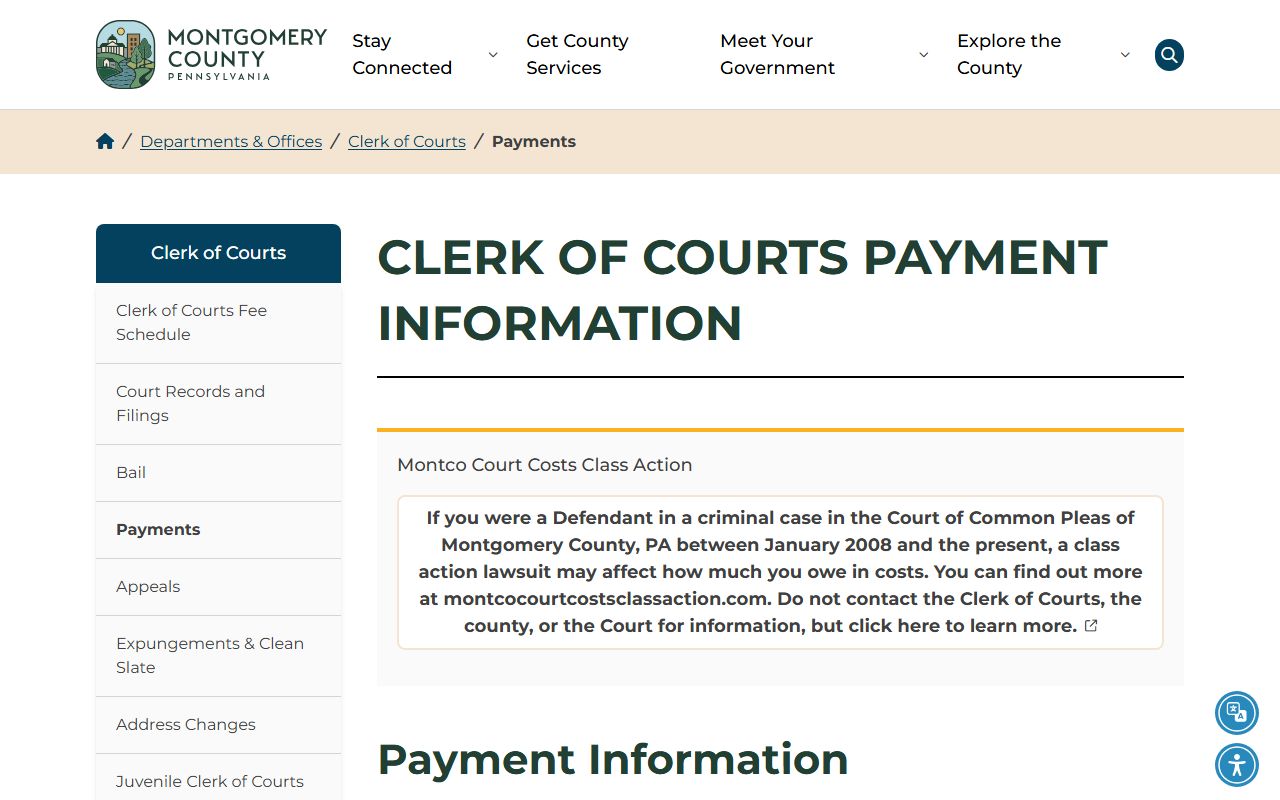
Payment records connect to criminal court records because fines, costs, restitution, and payment plans can appear with the criminal docket.
Search Montgomery County Criminal Records
Public criminal dockets are searched through UJS Case Search and UJS Case Information. Search modes include docket number, participant name, OTN, complaint number, incident number, SID, calendar event, attorney, and date filed. A criminal Common Pleas docket number can use the CP criminal format shown in research examples, while MDJ preliminary records can use the MJ format.
- Open UJS Case Search and choose a search mode, such as participant name, docket number, OTN, or complaint number.
- Select Montgomery County or the Montgomery judicial district when the form offers a county field.
- Use a date range, exact docket number, or other identifiers to narrow common names.
- Open the public docket sheet and review charges, events, pleas, disposition, sentence, and financial entries.
- Contact the Clerk of Courts when a certified copy, older record, payment-plan detail, or expungement filing is needed.
UJS warns that docket sheets are not official criminal-history background checks. Under 18 Pa.C.S. 9121, Pennsylvania State Police is the official source for criminal history record information.
Montgomery County Criminal Case Stages
A Montgomery County criminal case can move from police charges to an MDJ preliminary stage and then to the Court of Common Pleas. The docket records each court step. Preliminary arraignment addresses the early charge and bail. Preliminary hearing decides whether serious charges move forward. Common Pleas records then show formal filings, motions, plea or trial events, disposition, sentence, and post-sentence activity.
Case flow: Charges Filed › Preliminary Arraignment › Preliminary Hearing › Common Pleas Arraignment › Pretrial and Motions › Plea or Trial › Disposition › Sentencing
| Stage | What the Record Shows |
|---|---|
| Preliminary arraignment | Early court event, charge information, and bail decision in the MDJ layer. |
| Preliminary hearing | Whether charges are held for court, withdrawn, dismissed, or changed before Common Pleas. |
| Pretrial and motions | Filings, court orders, continuances, counsel activity, and scheduled events. |
| Plea or trial | The defendant's plea, trial event, verdict, or negotiated outcome when entered. |
| Sentencing | Sentence terms, probation, fines, costs, restitution, and related financial obligations. |
What Montgomery County Criminal Records Show
A criminal court record can show the docket number, court, county, judicial district, filing date, offense date, defendant name, counsel, charge list, statutory offense, grade, OTN, bail, event history, plea, disposition, sentence, fines, costs, restitution, and payment-plan status. It may also show whether a case is active, disposed, closed, limited access, sealed, expunged, held for court, withdrawn, or dismissed.
| Field | What It Shows |
|---|---|
| Docket Number | The Common Pleas or MDJ case number used to track the criminal matter. |
| Defendant | The person accused in the criminal case, along with public participant details when shown. |
| OTN | The Pennsylvania offense tracking number used in criminal record systems. |
| Charges | Statute, offense, grade, and charge status when displayed on the docket. |
| Docket Entries | Filings, hearings, motions, continuances, orders, pleas, and court activity. |
| Disposition | The outcome of the charge or case, such as guilty, dismissed, withdrawn, or not guilty. |
| Sentence | Probation, incarceration, fines, costs, restitution, or other penalty after conviction. |
Charges vs Convictions
A charge is an accusation filed in court. A conviction is the result of a guilty plea, finding of guilt, or verdict. A Montgomery County criminal court record can show charges that were amended, reduced, dismissed, withdrawn, or resolved through ARD. That is why the disposition field matters as much as the charge list.
| Point | Charge | Conviction |
|---|---|---|
| Meaning | Formal accusation filed in the case | Final finding or plea of guilt on a charge |
| Timing | Appears early in the docket | Appears after plea, verdict, or disposition |
| May Change | Can be amended, reduced, withdrawn, or dismissed | Can affect sentence, fines, probation, or later expungement issues |
| Best Field | Charge list and offense statute | Disposition and sentence entries |
Reading Criminal Dispositions
Disposition means the result of a charge or case. In Montgomery County criminal court records, a disposition can show whether a charge ended in a guilty plea, not guilty finding, dismissal, withdrawal, or other outcome. Sentencing entries then show what the court ordered after conviction. Fines, costs, restitution, and probation entries are part of the criminal court record, and they can matter long after the case is closed.
Montgomery County Adult Probation describes ARD as Pennsylvania's primary pretrial diversion program. Eligible people complete court-ordered requirements instead of going to trial, and successful completion results in dismissal and may make the person eligible for expungement. The county Adult Probation page is one of the page's image sources.
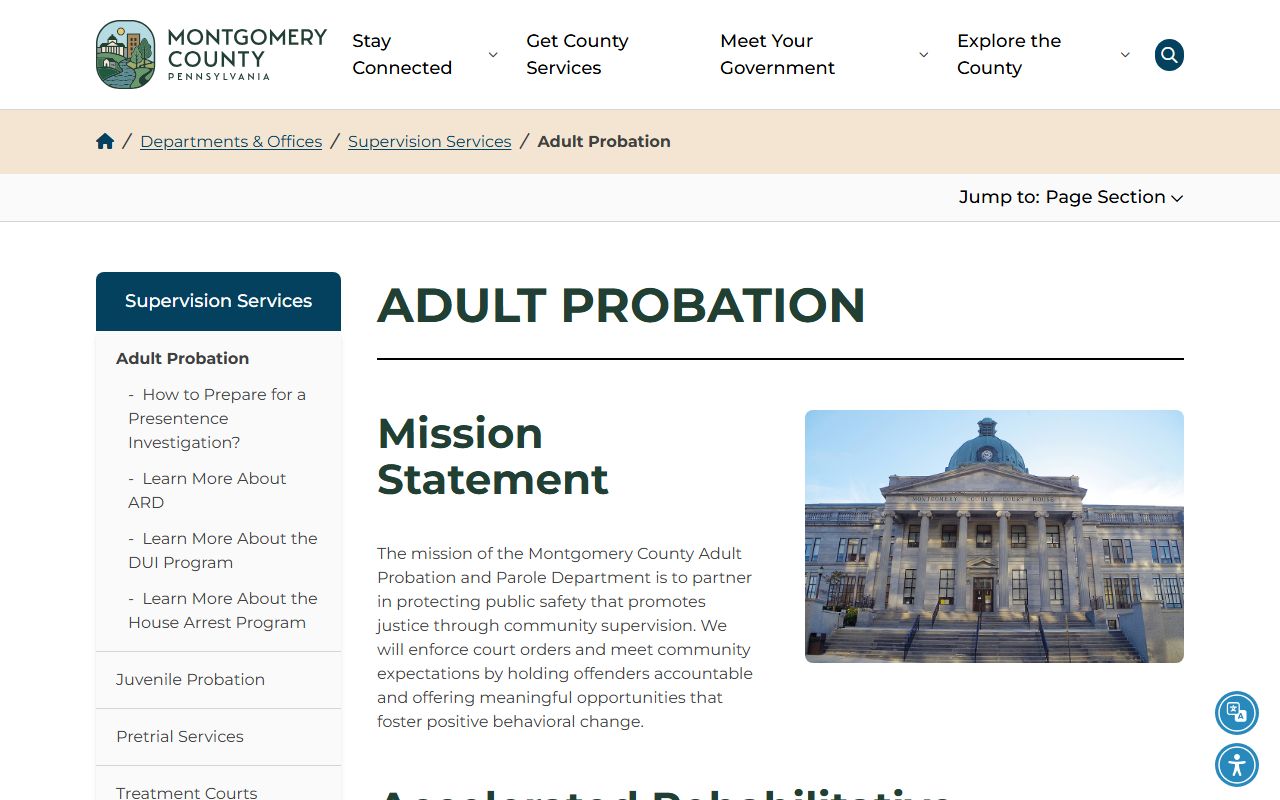
ARD entries should be read with care because dismissal after completion is not the same as an initial finding that no charge existed.
Montgomery County Criminal Payments
The Clerk of Courts accepts criminal fines, costs, restitution, and related payments in several ways. Research found in-office payment by cash, money order, certified check, debit card, Visa, MasterCard, and Discover. Online payments go through the PA UJS Portal by Visa, MasterCard, Discover, ATM card, or debit card with a Visa or MasterCard logo, with a 2.75% non-refundable convenience fee. Phone payments use Official Payments at 800-272-9829 with Jurisdiction Code 4873 and a $13.75 convenience fee. Mail payments can include personal checks, certified checks, or money orders, and must include defendant name and case number.
Unpaid criminal amounts can also affect civil records. Under 42 Pa.C.S. 9728(b), if a defendant owes more than $1,000 in restitution, fees, costs, fines, or penalties, the Clerk must notify the Prothonotary, creating a civil judgment. The criminal debt can then appear in a civil judgment context.
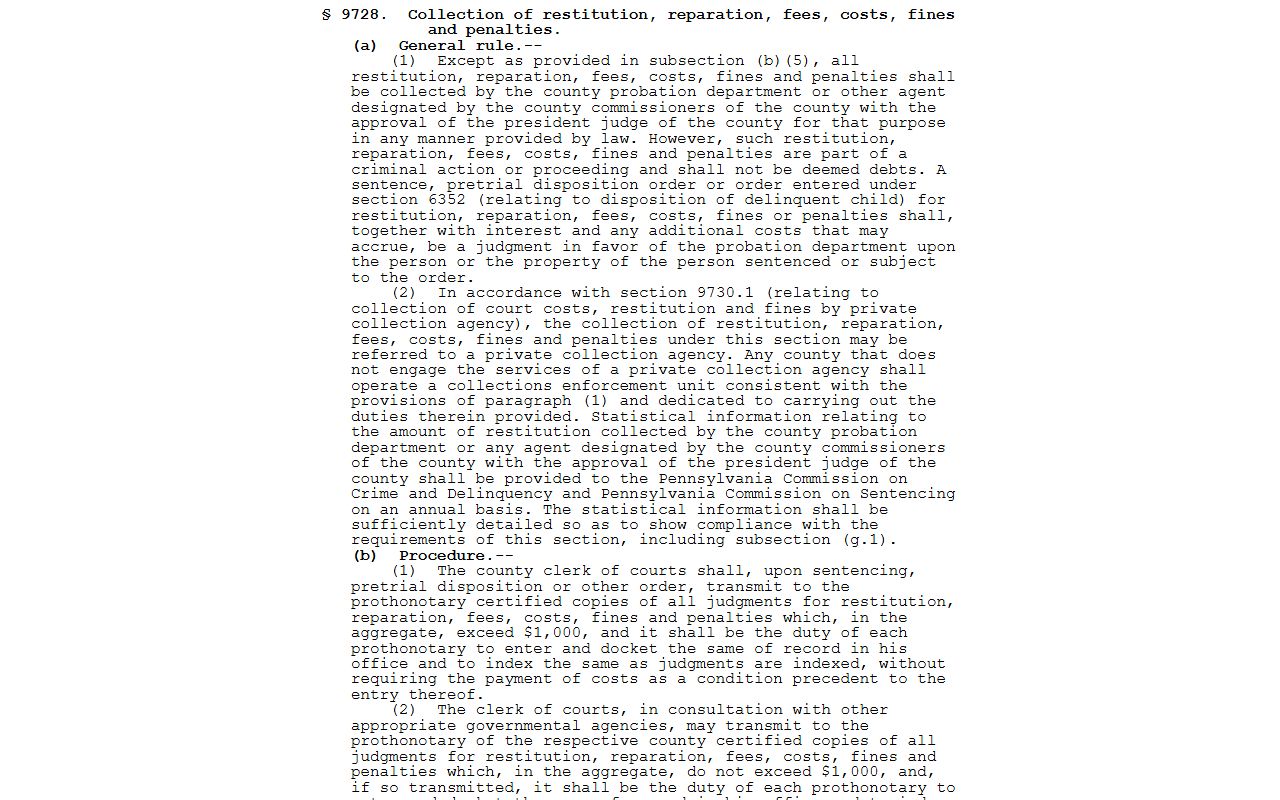
This is one of the key links between the criminal Clerk of Courts file and the civil Prothonotary judgment record.
DA Role in Montgomery County Criminal Records
The District Attorney prosecutes criminal cases in Montgomery County after charges proceed through the court system. Research identifies Kevin R. Steele as the District Attorney and describes the office as the chief law enforcement office for the county. The DA page places the courthouse office at 2 E. Airy Street and lists the DA Office phone as 610-278-3090. Police and prosecutors are tied to charge filing, but the court record itself is maintained through the courts and Clerk of Courts.
The county District Attorney page is included as a criminal court records source.
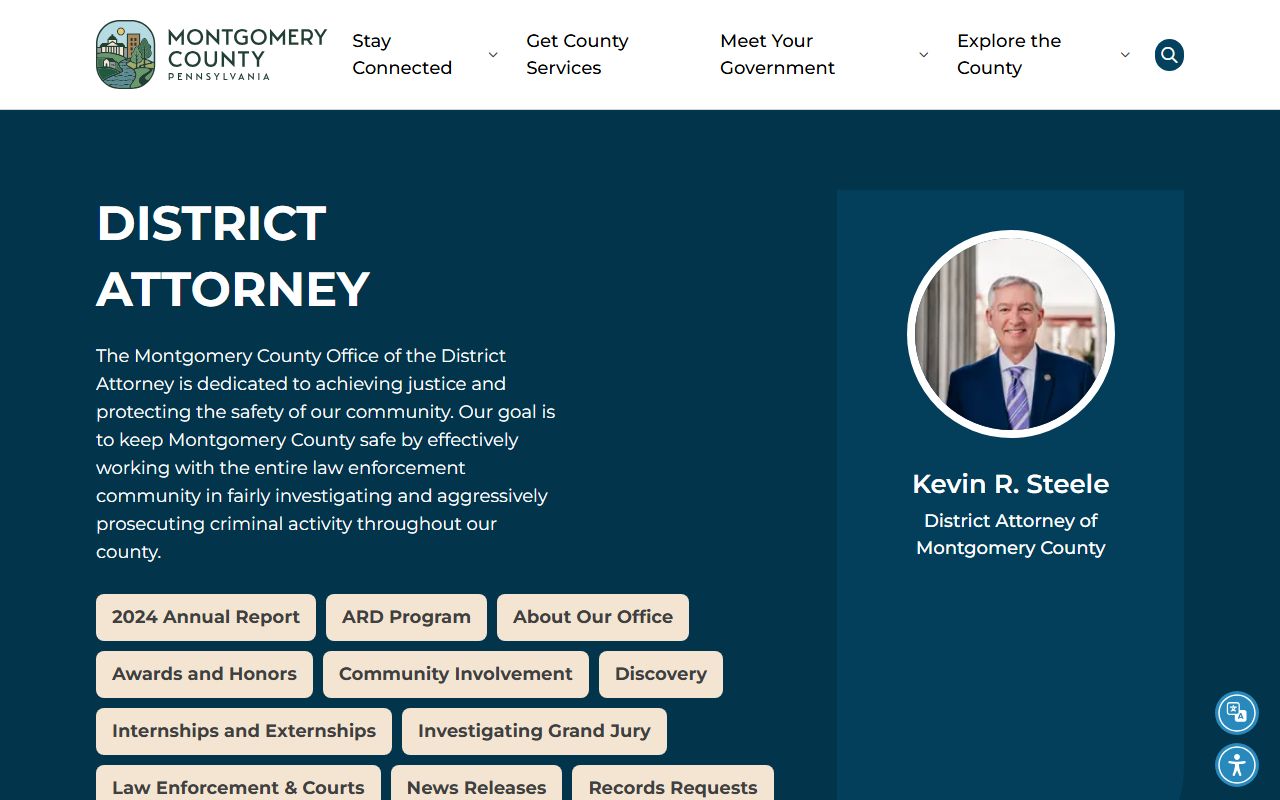
That office context helps explain who prosecutes the case, while the docket remains the court's official event record.
Sealed vs Expunged Criminal Records
Juvenile records, limited-access cases, sealed cases, and expunged criminal records do not work like ordinary adult public dockets. Pennsylvania's 18 Pa.C.S. 9122 governs expungement categories. UJS warns that limited-access cases are not public on the portal. The Clerk of Courts routes users to expungement resources and filings, but research did not locate an exact Montgomery County expungement filing fee.
| Point | Sealed or Limited Access | Expunged |
|---|---|---|
| Public visibility | Hidden from public portal access under court or state rules | Removed from public record after the expungement process is complete |
| Common examples | Limited-access adult cases, juvenile restrictions, confidential filings | Eligible criminal history under statutory conditions |
| Practical step | Review the court rule or seek a court order if access is needed | File the correct petition and wait for court and agency processing |
The expungement statute page is one of the manifest images assigned to this criminal court records page.
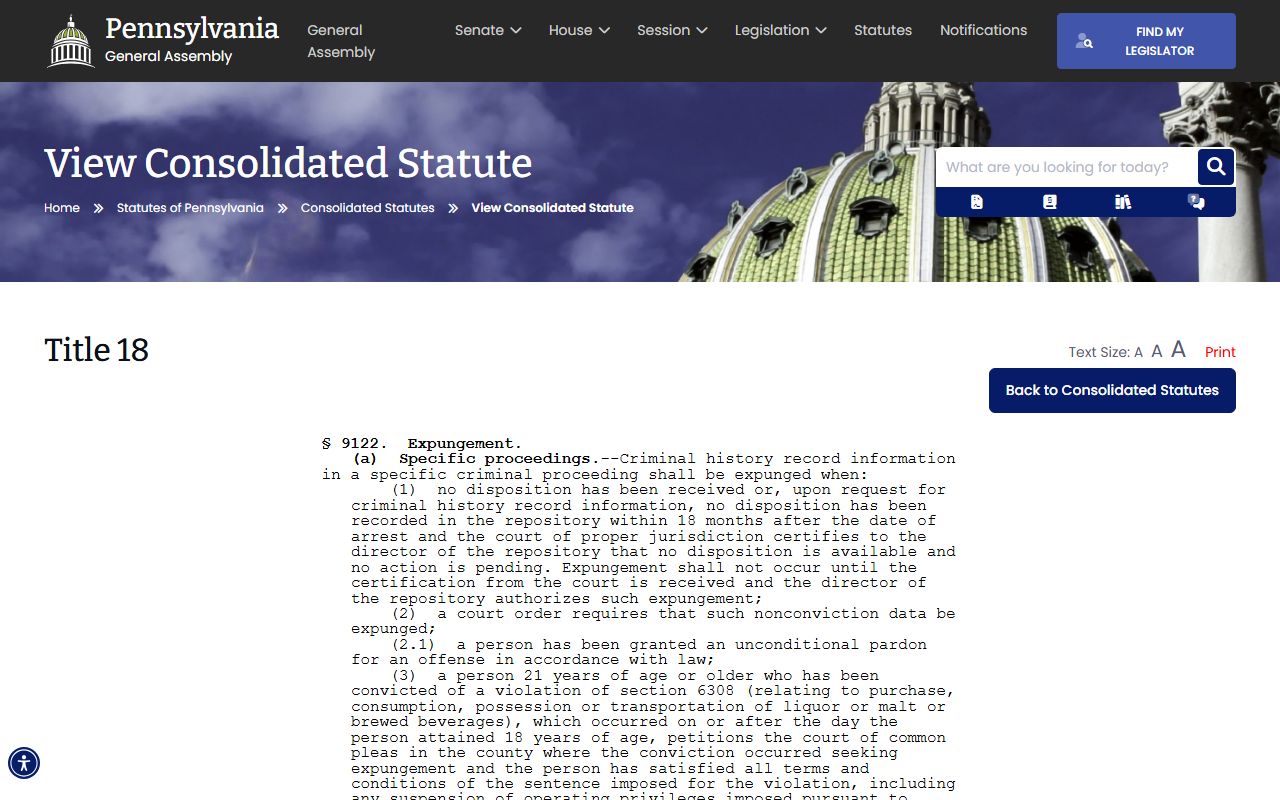
Expungement is not instant because the court order must be processed by the court and related agencies.
DUI Criminal Court Records
DUI cases are criminal matters, even though they often begin with a traffic stop. Montgomery County's DUI Program is certified through Alcohol Highway Safety School. The required course is 12.5 hours, and the research notes a CRN evaluation for all people charged with DUI in Pennsylvania. Certain DUI cases require a drug or alcohol assessment, including prior DUI, under age 21 at arrest, controlled-substance use, chemical-test refusal, BAC 0.16% or higher, or CRN recommendation.
The county DUI Program source is assigned to this page.
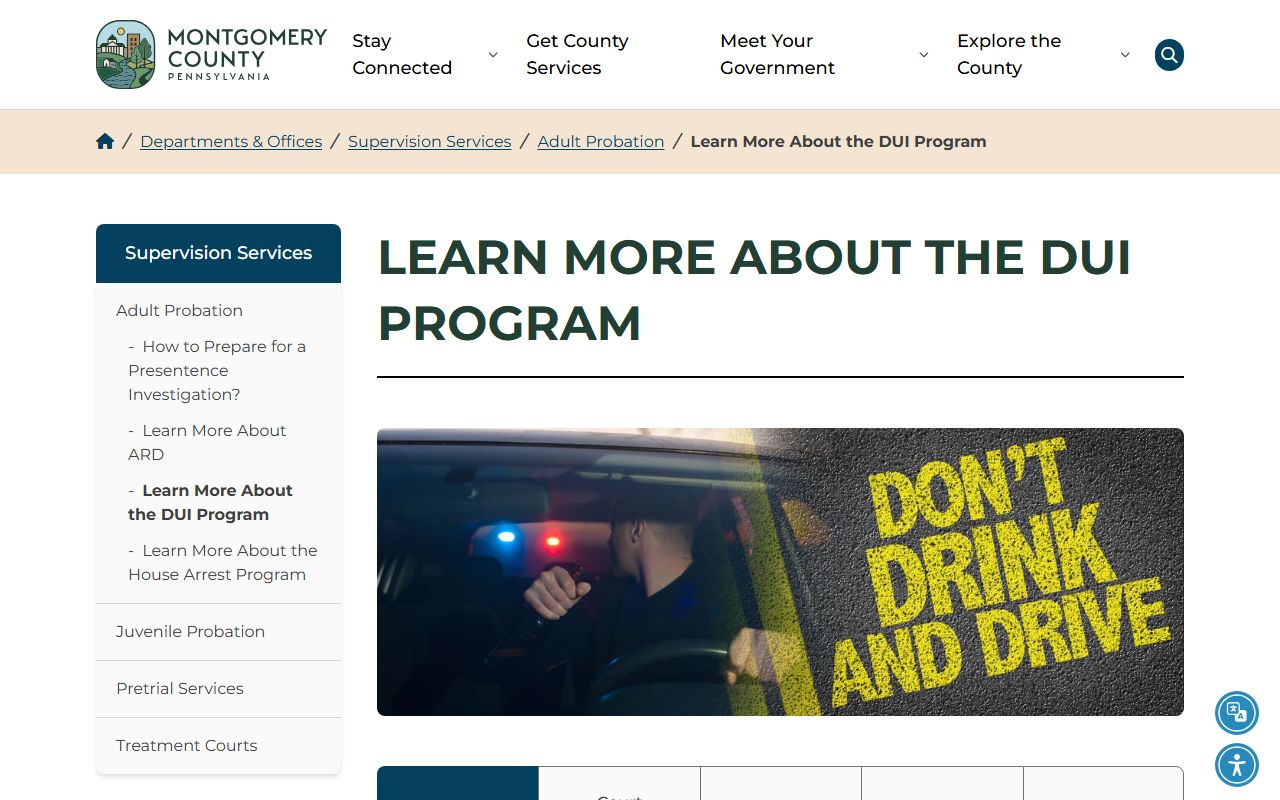
DUI docket entries should be read as criminal case records, with driver-history consequences handled separately through PennDOT.